



By: Natalia Pierce
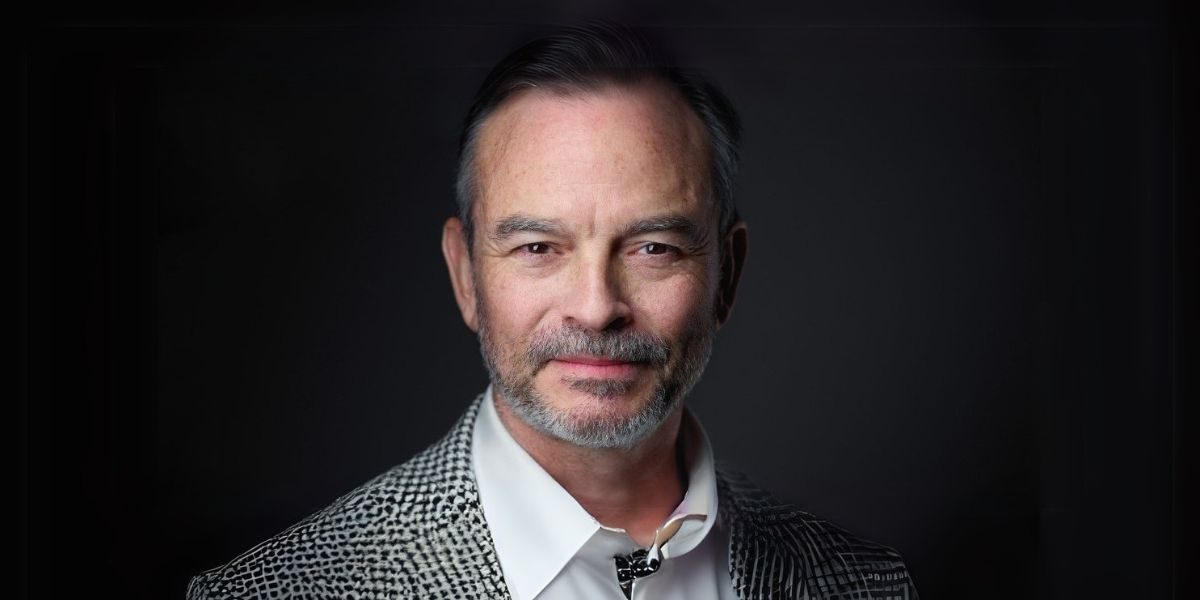
The quiet, intermittent message notification tones can be heard in the background as Dr. Jason Giles recalls the moment his life irrevocably changed. Twenty-five years ago, he wasn’t dispensing expertise on addiction treatment—he was fighting for his career and life, caught in the grip of an injectable opioid addiction during his anesthesiology residency.
“Rock bottom looks different for everyone,” he says, his voice steady but tinged with the gravity that comes from personal redemption. “Mine wore a white coat and hospital badge.”
His personal journey through addiction’s darkness now illuminates the path for countless others through Addiction Doctors, the telemedicine company Dr. Giles founded amid the chaotic early days of the pandemic. What began as a practical solution to lockdown restrictions has evolved into something far more revolutionary—a complete reimagining of how medical expertise can reach those in recovery.
When Crisis Breeds Innovation
The pandemic didn’t create the cracks in addiction treatment’s medical support system—it merely exposed them. Long before COVID-19 made headlines, treatment centers across America operated with what Dr. Giles describes as a troubling secret: most physicians serving these facilities do so as “side hustles.”
“I’ve seen it countless times,” he explains, leaning forward in his chair during our video call. “A treatment center starts small with a doctor who can handle five or even ten patients easily. Then they grow to eighteen or twenty-four beds and that model breaks down. When medical oversight doesn’t scale with growth the doctor gets stretched thinner until quality suffers.”
This revelation came into sharp focus when lock-down restrictions suddenly prevented physicians from traveling between clinics. In that moment of systemic vulnerability, Dr. Giles—with his two decades of addiction medicine experience—recognized an opportunity to transform crisis into a new way forward.
Addiction Doctors emerged not merely as a telehealth provider but as a virtual medical team embedded within treatment centers. Their approach upends the traditional model by providing treatment centers with instant access to a full complement of addiction medicine specialists—nurses, physicians, psychiatrists, and compliance oversight—all available at a moment’s notice through their proprietary communications platform.
The 17-Minute Revolution
In addiction treatment, time isn’t just money—it’s potentially life or death. When a patient experiencing painful withdrawal needs medication adjustment, each minute of delay represents suffering that can derail recovery before it begins.
“Our average response time is 17 minutes,” Dr. Giles reports without bravado, though the figure merits it. “Our standard is within one hour, but we consistently outperform that.”
This statistic represents a quantum leap from industry norms, where treatment center staff might wait hours—sometimes days—for physician responses to urgent medical questions. The implications ripple throughout the entire treatment ecosystem.
Julia Cates, a head nurse at a California recovery center that partners with Addiction Doctors, described the before-and-after effect: “Previously, I’d reach out to and hope the doctor would see my request during rounds later that week. Now I send a message and often have orders before I’ve finished my next assessment. It’s changed everything about how confidently we can care for these patients.”
This immediacy transforms more than just patient care. Treatment center staff—often stretched thin—find themselves empowered rather than abandoned. The constant availability of expert medical consultation provides what Dr. Giles calls “the invisible benefit” of staff retention.
“When you’re facing a patient in distress and you know help is minutes away, not hours, it changes your entire professional experience,” he observes. “Staff burnout decreases dramatically.”
Elegance in Simplicity
Perhaps counterintuitively for an innovative healthcare company, Addiction Doctors’ medical protocols are characterized not by complexity but by focused simplicity. Dr. Giles’ team rejects the common practice of providing extensive lists of “comfort medications” that on-site staff must navigate.
“We’ve identified specific medications that address the key symptoms of withdrawal and early recovery,” he explains. “Our approach isn’t about having twenty options and leaving it to the tech to guess—it’s about having the right targeted options, used expertly.”
This philosophy initially can create friction with the nursing staff at treatment centers accustomed to what Dr. Giles calls “the spaghetti approach,” otherwise known as ‘throw it at the wall and see what sticks’. His team observes a consistent pattern: initial resistance followed by profound appreciation for what he calls “elegant simplicity.”
“There’s this moment—usually about two weeks in—when the staff suddenly gets it,” he says with a knowing smile. “They see patients stabilizing faster with fewer medications. The documentation is clearer. Everything just works better.”
That documentation—often an afterthought in healthcare but critical for insurance reimbursement—represents another area where Addiction Doctors has dramatically improved industry standards. They’ve compressed documentation response times from days to same-day completion, a change that directly impacts both information sharing and treatment center financial health.

The Alchemy of Personal Experience
Behind the metrics and methodologies lies something far more powerful: Dr. Giles’ personal understanding of addiction’s grip. His recovery journey included participation in a physician monitoring program—an experience he describes as “the gold standard of recovery support.”
“I was monitored intensively for five years,” he recalls. “Random drug tests, mandatory therapy, accountability structures—it was rigorous. And it saved my life.”
This program now serves as the blueprint for how Addiction Doctors approaches patient care. Unlike many executives who maintain professional distance from their company’s services, Dr. Giles speaks with the dual authority of provider and former patient.
When asked about his leadership philosophy, he doesn’t recite business school platitudes. Instead, his answer comes from somewhere deeper: “If it’s good for the patient, then we’re for it. Period. I tell my team to treat every patient like they’re the family member you care about deeply.”
This isn’t merely sentiment. It’s strategy—one that stands in stark contrast to the profit-first mentality that has plagued some corners of the addiction treatment industry.
America’s Fundamental Health Crisis
Dr. Giles doesn’t mince words when discussing addiction’s societal impact. “It’s America’s number one health problem,” he states flatly. “So many other health issues stem from our various addictions—to substances, behaviors, food. We’re a nation with a relationship problem, and substances are just one manifestation.”
He sees signs of renewed focus on this crisis with the appointment of Robert F. Kennedy Jr. as Health and Human Services Secretary, noting Kennedy’s personal recovery journey and longtime advocacy for addiction treatment.
More profoundly, Dr. Giles reframes how we should view those struggling with substance use disorders: not as societal burdens but as dormant assets.
“The person suffering from addiction today could be the person who cures cancer tomorrow if they get proper treatment,” he says. “I’ve seen brilliant minds, incredible talents nearly lost to addiction, then flourish in recovery. These aren’t throwaways—they’re potentially our most valuable citizens.”
This perspective—seeing the phoenix potential in each patient—infuses Addiction Doctors’ approach to telemedicine. Their system isn’t merely about improving immediate patient care but about transforming long-term outcomes by creating the conditions where genuine healing can occur.
As our conversation ends, Dr. Giles returns to where he began—his own journey. “Twenty-five years ago, someone saw potential in me when I couldn’t see it in myself,” he says quietly. “Everything I’ve built since then is about paying that forward.”
In a field often defined by statistics and studies, Addiction Doctors reminds us of something more fundamental: behind every innovation in addiction treatment lies the simple, powerful belief that every person deserves the chance to rewrite their story.
Want to learn more about Dr. Giles? Read more at his Substack at Dr Jason Giles Substack.
Disclaimer: The information provided is for informational purposes only and should not be construed as medical advice. Readers should consult with a healthcare professional for personalized advice regarding addiction treatment.
Published by Jeremy S.
